The most advanced way to observe a cancer journey.
Teloma gives care teams a structured, patient-consented view of everything that happens between visits, gives researchers a live, de-identified engine wired into the world's public oncology data — and gives patients real ownership of their own record.
One platform, four seats at the table
I'm a…

Clinician
Patient-granted records, structured pre-visit context, one-page summaries.
See what you get →

Researcher
Live public-data assistant, simulators, and de-identified CSV/JSON/FHIR export.
See what you get →
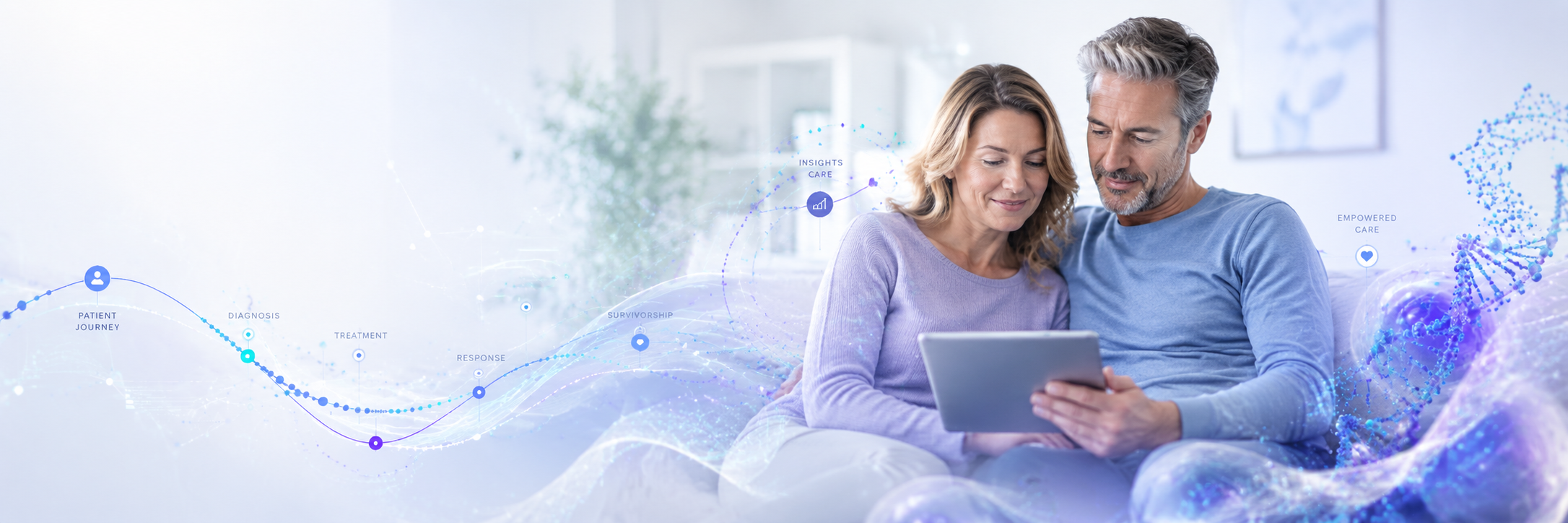
Patient
Track your journey, prep for visits, share on your terms.
See what you get →

Caregiver
Log on their behalf under access they grant — and can revoke.
See what you get →
Running a clinic or health system? Organizations are provisioned automatically on first Microsoft work-account sign-in — start with the care-team overview or read the admin docs.
Why teams choose Teloma
Adopted by care teams, powered by patients, built for research
Clinics and research teams bring Teloma in; patients and caregivers keep the record alive. Everyone works from the same consented, structured source of truth.
One structured record
Symptoms, treatments, labs, imaging, documents, and questions on a single chronological timeline — for any cancer type.
Clinician-ready output
A deterministic one-page summary, serial lab trends, and a research-use-only tumor-state view — organized signal, not raw notes.
A live research engine
A conversational assistant wired into ClinicalTrials.gov, PubMed, cBioPortal, and NCI GDC — plus simulators, cohort insights, and de-identified CSV/JSON/FHIR export.
Consent at the core
Patients grant and revoke every access. Research participation is a separate, explicit opt-in. Every action lands in an append-only audit log.
The core idea
Cancer, treated as an observability problem
The same signal shape software teams use to keep complex systems alive — logs, metrics, events, system state, outcomes — maps cleanly onto a cancer journey. Teloma applies it end to end.
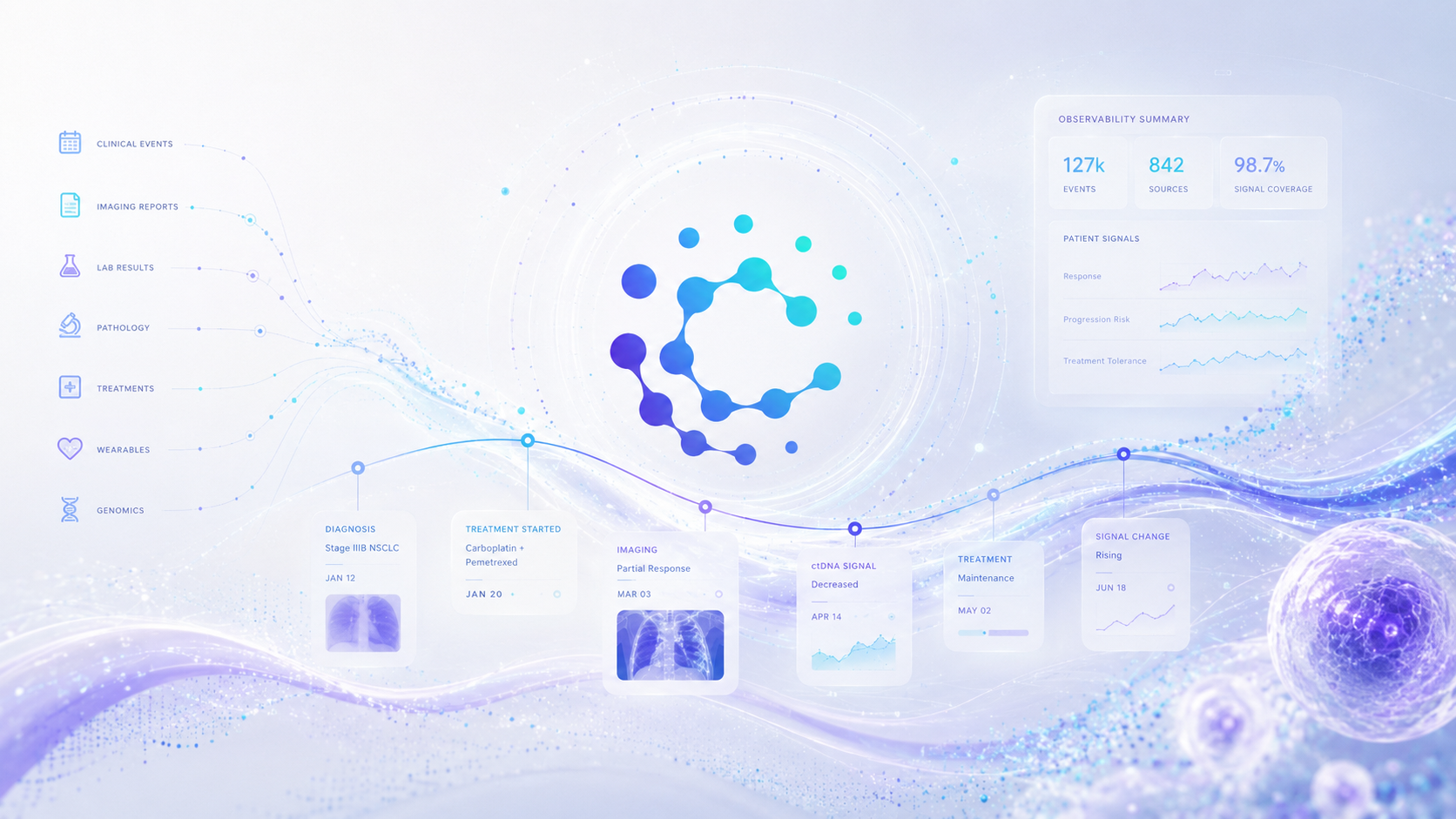
logs
Symptoms
metrics
Labs & vitals
events / traces
Diagnosis · biopsy · treatment · imaging · adverse events
system state
Pathology · genomics · imaging
outcomes
Treatment response & recurrence
analytics layer
Research engine
Trust, by architecture
Health data deserves more than a privacy policy
Access control, de-identification, and auditability are enforced in the platform itself — not promised in the fine print.
Safety & scope →Role-based access
Patient, caregiver, clinician, researcher, and admin roles with per-patient, revocable grants.
Audited end to end
Every view, export, and denial recorded in an append-only audit log.
De-identified research plane
Researchers never see identity — names, DOBs, MRNs, and exact dates are stripped by architecture, not policy.
Encrypted document vault
Records live in encrypted storage; access happens through short-lived signed links only.
See it with real signal
The demo environment loads sample patients across several cancers so you can explore the timeline, clinician views, research workspace, and export tools — no setup required.